The Complete Gnostic Encyclopedia

A–Z People, Aeons, Archons, Places, Symbols, Texts, Schools, Rituals, and Terms

Every name. Every concept. Every source. Cross-referenced and evidence-tagged.

Book 6 of 7

An A–Z knowledge base covering every significant figure, concept, text, school, and symbol in the Gnostic corpus. Each entry includes definition, source occurrences, school associations, date range, language notes, name variants, related entities, scholarly disagreements, evidence classification, and links to every chapter and visual where the entity appears.

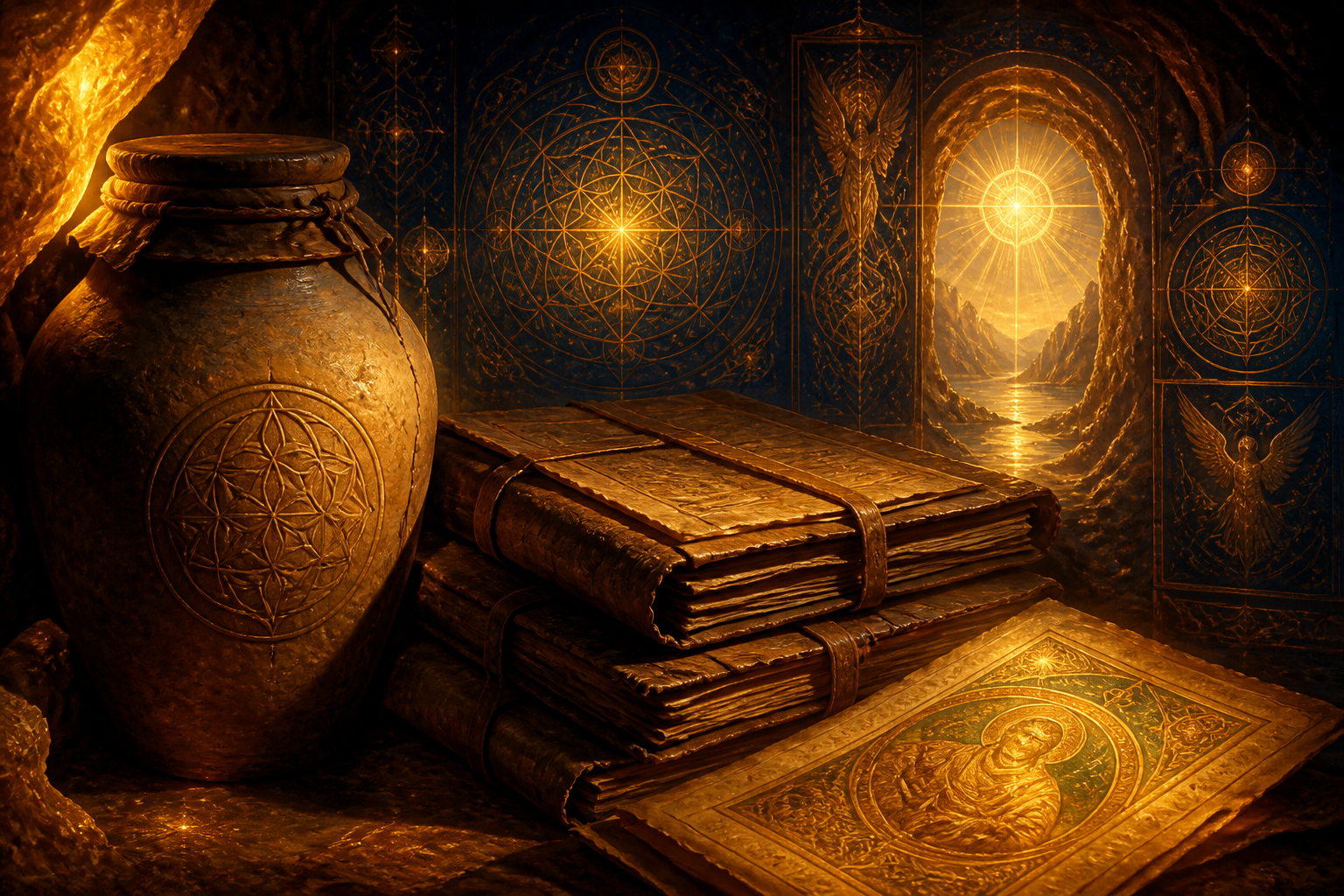
An ancient sealed clay jar and stacked leather-bound papyrus codices in warm desert cave light
The recovered witness — the Nag Hammadi codices, the tradition’s own voice restored.

1.A–C: From Achamoth to the Counterfeit Spirit

3 min
P1H

Achamoth, Adam (heavenly and earthly), Adamas, Allogenes, Apocalypse of Adam, Archons, Autogenes, Barbelo, Basilides, Bridal Chamber, Bruce Codex, Cain, Christ (Gnostic), Codex, Counterfeit Spirit.

This encyclopedia is organized alphabetically, but every entry is built on the same disciplined pattern: definition, the sources in which the term occurs, the schools that used it, the range of dates and languages involved, name variants, related entities, the scholarly disagreements that remain genuinely open, and an evidence classification so the reader always knows whether a statement rests on primary texts, historical reconstruction, comparison, or synthesis. The A–C span gathered here runs from Achamoth to the Counterfeit Spirit, and it introduces several of the tradition’s load-bearing terms (evidence class P1 for the primary occurrences, H for reconstructions).

Achamoth is the lower Sophia of the Valentinian systems — the portion of Wisdom that fell outside the fullness and must be recovered, distinguished from the higher Sophia who remains within. Adam appears in two registers that must never be conflated: the heavenly Adam (Adamas, Pigeradamas), the archetypal luminous human of the divine world, and the earthly Adam fashioned by the rulers, into whom the light is breathed. Adamas is that heavenly prototype, the perfect human existing before and above the rulers’ counterfeit. The Apocalypse of Adam, a Sethian text, presents Adam’s deathbed revelation to Seth concerning the history and salvation of the enlightened seed (evidence class P1).

Allogenes — “the Stranger” or “one of another race” — names both a visionary figure and a Nag Hammadi treatise recording a Platonizing ascent to the Unknowable One; the title marks the Gnostic as one whose true origin lies elsewhere than in the rulers’ world. The Archons are the rulers themselves, treated exhaustively in this Library’s fourth volume. Autogenes, “the Self-Generated,” is the divine Son who comes forth within the fullness, often identified with the Christ-aeon and set over the four luminaries (evidence class P1).

Barbelo is among the most important entries in the whole encyclopedia: the first emanation of the invisible Spirit, the divine First Thought or Forethought (Pronoia), frequently described in feminine terms as the Mother, the womb of the entirety, the Barbelo-aeon within whom the divine world unfolds. She is central to the entire family of “Barbeloite” or Sethian texts. Basilides is the early second-century Alexandrian teacher whose system — known mainly through the hostile summaries of Irenaeus and Hippolytus, which disagree with each other — featured a vast hierarchy of heavens (famously 365) and a subtle doctrine of the unknowable God (evidence class H, given the dependence on secondary reports).

The Bridal Chamber is the highest Valentinian sacrament, the mystery of reunion treated at length in the Gospel of Remembering. The Bruce Codex is one of the manuscript witnesses preserving the Books of Jeu and related material. Cain, in certain Gnostic reversals of Genesis, is reevaluated against the conventional reading, part of the broader hermeneutic that inverts the values of the creator-narrative. The Gnostic Christ is the revealer-aeon who descends to awaken the sleeping, understood in varied relation to the man Jesus across the schools. The Counterfeit Spirit (antimimon pneuma) closes the span: the false interior counterpart fashioned by the rulers to imitate the true spirit and hold the soul in forgetting — one of the tradition’s most psychologically penetrating concepts (evidence class P1).
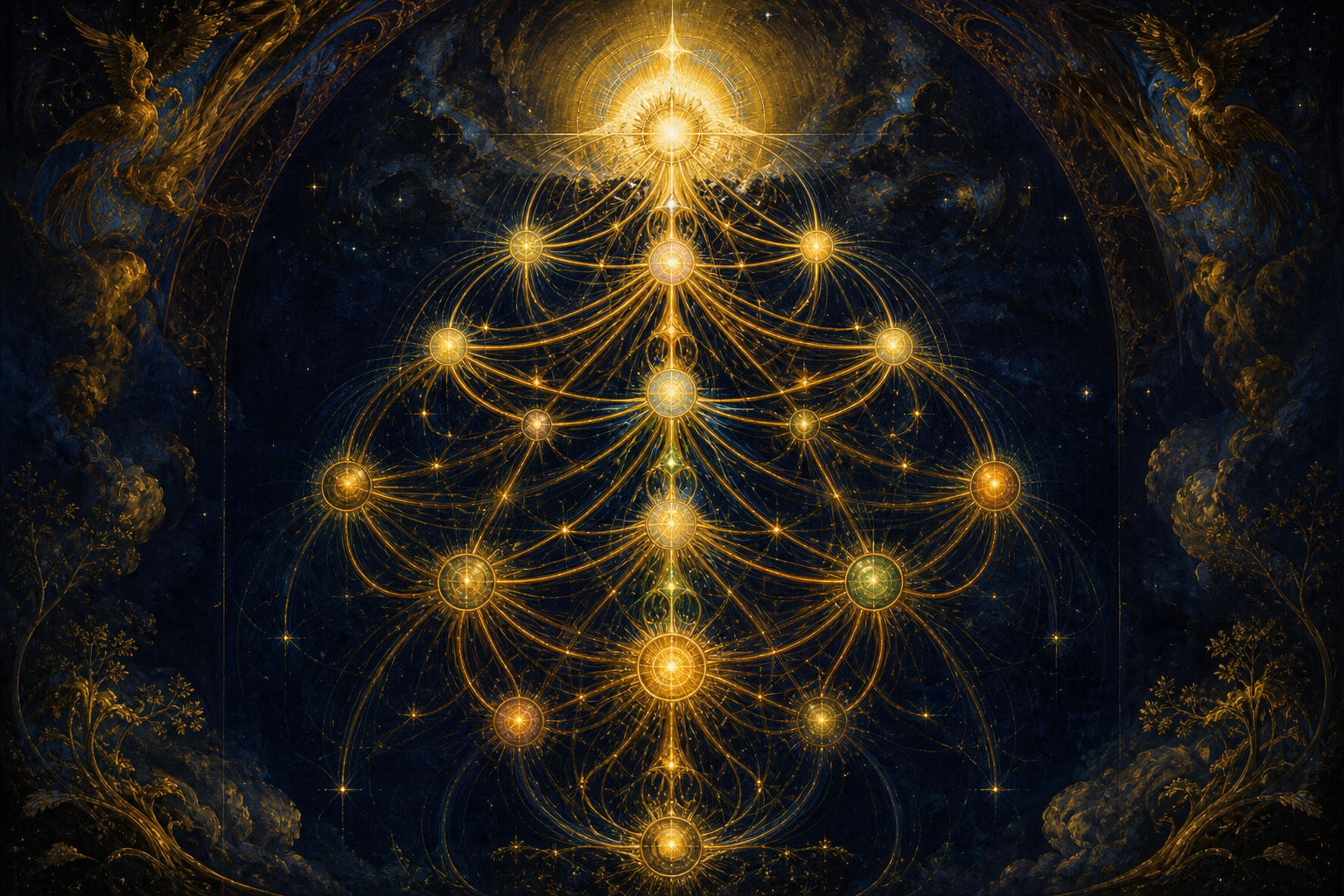
An abstract tree of light: branching gold lines connecting glowing nodes descending from a crown of light
The unfolding — emanation of the aeons from the Source (uncertainty in the outer branches).

2.D–G: From Daveithai to the Gospel of Truth

2 min
P1H

Daveithai, Demiurge, Eleleth, Emanation, Epinoia, Eve/Zoe, Five Seals, Forgetfulness, Gnosis, Gospel of Mary, Gospel of Philip, Gospel of Thomas, Gospel of Truth, Great Invisible Spirit.

The D–G span runs from Daveithai to the Gospel of Truth and includes several of the tradition’s most consequential terms — among them Demiurge, Gnosis, and the great gospel-titles of the Nag Hammadi library. As throughout, entries mark the difference between what the primary texts state, what scholarship reconstructs, and where genuine disagreement remains (evidence classes P1 and H predominating).

Daveithai is the third of the four luminaries of the Sethian world, alongside Harmozel, Oroiael, and Eleleth — the great lights set within the divine realm as stations of the aeons and, in some texts, as the places to which the enlightened seed is assigned. The Demiurge — literally “craftsman” — is the maker of the lower world, identified in most Gnostic systems with the ignorant chief ruler Yaldabaoth; the term is borrowed from Platonic philosophy and turned critical, naming a fashioner who builds without knowing the fullness above him. Eleleth is the fourth luminary and, in the Hypostasis of the Archons, the great angel who descends to instruct Norea (evidence class P1).

Emanation names the mode by which the divine world unfolds — not creation from nothing but the flowing-forth of aeons from the Source, each pair (syzygy) proceeding in an ordered genealogy. Epinoia, “Insight” or “Afterthought,” is the luminous helper sent into Adam, the awakening intelligence hidden in the human, closely bound to the light-bearing feminine powers. Eve, in her spiritual aspect identified with Zoe (“Life”), is the awakening intelligence within humanity — in the striking reversals of some texts, the one through whom knowledge comes, and the serpent’s counsel a step toward gnosis rather than a fall (evidence class P1 for the reversal, with the caution that the schools varied).

The Five Seals are the Sethian baptismal mystery treated in the Gospel of Remembering. Forgetfulness is the tradition’s name for the fundamental human predicament — the light’s sleep to its own nature. Gnosis, the central term of the whole Library, is transformative recognition rather than mere information, the self-knowledge that is simultaneously knowledge of the divine origin (evidence class P1; its interpretation, class C).

The great gospels close the span. The Gospel of Mary preserves Mary Magdalene as a visionary and teacher, and dramatizes conflict over her authority. The Gospel of Philip is the fullest witness to Valentinian sacramental theology. The Gospel of Thomas — a collection of sayings, some paralleling the canonical gospels — centers on the finding of the living meaning within the words and the recognition of the kingdom “spread out upon the earth.” The Gospel of Truth, likely Valentinian and possibly by Valentinus himself, is a meditation of extraordinary beauty on Error, forgetting, and the joy of the Father’s discovery. The Great Invisible Spirit is the transcendent Source itself, beyond name and comprehension (evidence class P1 for the texts; authorship questions, class H).

An ancient sealed clay jar and stacked leather-bound papyrus codices in warm desert cave light
The recovered witness — the Nag Hammadi codices, the tradition’s own voice restored.

3.H–L: From Harmozel to the Luminaries

2 min
P1H

Harmozel, Heimarmene, Heracleon, Hippolytus, Horos, Hypostasis, Ialdabaoth, Image, Irenaeus, Jeu, Knowledge, Light, Limit, Luminaries.

The H–L span runs from Harmozel to the Luminaries, and gathers the technical vocabulary of the divine world alongside the two indispensable heresiologists whose reports, for all their hostility, preserve much we would otherwise have lost. Entries mark carefully where our knowledge depends on these hostile witnesses (evidence class H) versus the recovered primary texts (evidence class P1).

Harmozel is the first of the four luminaries, the station associated with Adamas, the heavenly human. Heimarmene is fate — the chain of astral determinism the rulers impose through the planetary spheres, the felt experience of a life scripted and constrained; liberation is in part liberation from heimarmene. Heracleon was a leading Valentinian teacher, remembered as the author of the earliest known commentary on the Gospel of John, fragments of which survive through Origen’s later engagement with him (evidence class H for the fragments).

Hippolytus of Rome is one of the two great heresiological sources, whose Refutation of All Heresies preserves detailed and sometimes uniquely valuable summaries of Gnostic systems, including material found nowhere else; like all the heresiologists he must be read critically, since his purpose was refutation. Horos, “Limit” or “Boundary,” is the Valentinian power that separates and stabilizes — the boundary that restores order after Sophia’s passion, marking the edge of the fullness. Hypostasis means a concrete reality or substantial existence; the Hypostasis of the Archons is the Nag Hammadi treatise on the reality and defeat of the rulers (evidence class P1).

Ialdabaoth is a spelling of Yaldabaoth, the chief ruler (fully treated at Y). Image is a load-bearing concept: the light-world casts an image on the waters, and the rulers fashion the human “according to the image” they glimpse but do not comprehend — the human is made in the likeness of a divine original the makers themselves cannot understand. Irenaeus of Lyons is the earliest major heresiologist, whose Against Heresies (c. 180 CE) preserves our fullest early account of Valentinian and other systems; the Nag Hammadi discoveries have repeatedly confirmed that, however hostile, he often reported real teachings with substantial accuracy (evidence class H, upgraded toward P2 where the codices confirm him).

Jeu names the figure and the two Books of Jeu, ritual texts of seals, names, and passwords for the ascent. Knowledge, in the transformative sense, is gnosis (see G). Light is the fundamental substance of the divine world and of the seed within the human — the reality that fell, was scattered, and is gathered home. Limit is Horos (see above). The Luminaries — Harmozel, Oroiael, Daveithai, and Eleleth — are the four great lights of the Sethian cosmos, the stations within the divine world to which the aeons and the enlightened seed are assigned (evidence class P1).

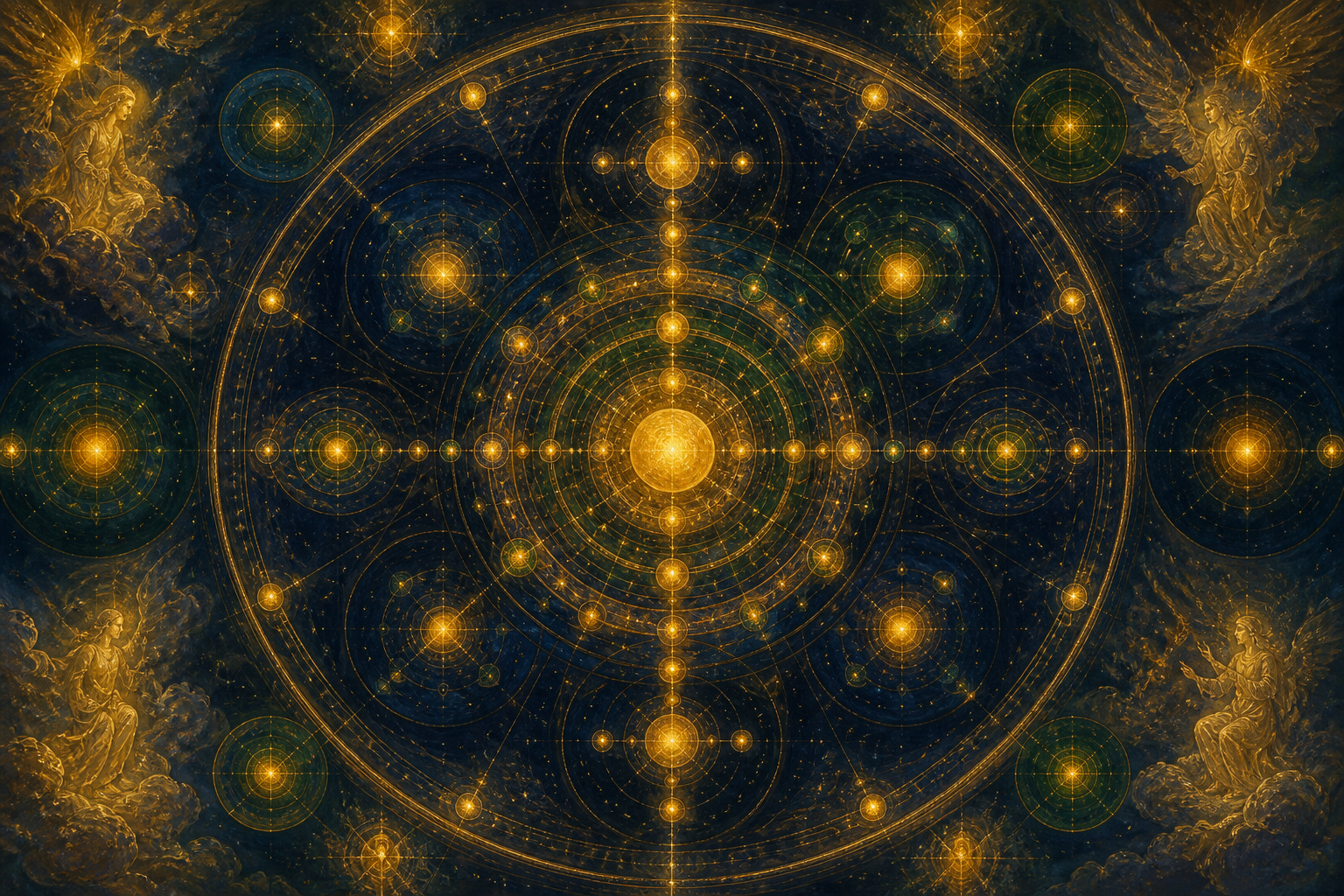
A luminous map of concentric spheres and paired points of light — the fullness of the aeons
The Pleroma — the fullness of the divine aeons.

4.M–P: From Marsanes to the Pronoia Hymn

2 min
P1H

Marsanes, Melchizedek, Monad, Nag Hammadi, Naassenes, Norea, Ogdoad, Ophites, Oroiael, Passions, Pistis Sophia, Pleroma, Pronoia, Protennoia, Prunikos, Ptolemy.

The M–P span runs from Marsanes to the Pronoia Hymn and includes the discovery that made this entire Library possible — the Nag Hammadi find — alongside the tradition’s central positive terms: Monad, Ogdoad, Pleroma, and the descending Forethought. Evidence classes P1 and H predominate, with H marking the reconstructions of communities and schools.

Marsanes is a Sethian Platonizing treatise recording an ascent through levels of reality and a doctrine of the unknowable Source. Melchizedek is the subject of a fragmentary Nag Hammadi text that recasts the priestly figure in a Gnostic-apocalyptic frame. The Monad is the divine One, the unitary Source — treated at length in this Library’s second volume — the absolute unity from which all multiplicity flows. Nag Hammadi is the site in Upper Egypt where, in 1945, a jar of thirteen codices was discovered, preserving some fifty-two mostly Gnostic texts in Coptic and transforming the study of the tradition from a reconstruction out of hostile summaries into an encounter with the Gnostics’ own voices (evidence class H for the circumstances, P1 for the texts themselves).

The Naassenes — from the Hebrew nahash, “serpent” — were a Gnostic group described by Hippolytus, notable for their exegesis and their reverence for the serpent as a symbol of wisdom. Norea is the defiant feminine figure who confronts the rulers (treated in the fourth volume). The Ogdoad is the “eighth” — the region above the seven planetary spheres, the first station of freedom beyond the rulers’ heavens, and in some systems the dwelling of the restored lower Sophia. The Ophites (“serpent people”) are a Gnostic current known largely through heresiological reports, associated with the diagram Origen describes (evidence class H).

Oroiael is the second luminary. Passions, in the tradition, are the reactive states — desire, fear, grief, aversion — installed by the rulers through the counterfeit spirit, the very stuff of bondage that the path strips away. Pistis Sophia (“Faith-Wisdom”) names both the fallen Sophia in her longing and the long, late Gnostic text of her repentances and Jesus’s post-resurrection teaching. The Pleroma is the “Fullness” — the divine world in its totality, the assembly of the aeons, the home from which the light fell and to which it returns; it is the great positive term the whole drama moves toward (evidence class P1).

Pronoia and Protennoia — “Forethought” and “First Thought” — name the descending divine, the one who goes down into the forgetting to awaken the sleeping; the Pronoia Hymn appended to the longer Apocryphon of John and the treatise Trimorphic Protennoia are its great expressions. Prunikos is the contested epithet of Sophia, treated critically in the third volume as a probable polemical distortion. Ptolemy was a major Valentinian teacher whose Letter to Flora, preserved by Epiphanius, is a rare surviving Gnostic document addressed to an inquirer, and a model of measured argument (evidence class P1 for the Letter; class H for its context).

A robed feminine figure of light descending, a trailing ribbon of luminescence falling from the fullness into shadow
Sophia — Wisdom’s reaching and descent from the fullness.

5.Q–S: From the Reality of Rulers to Syzygy

2 min
P1H

Reality of the Rulers, Resurrection (Gnostic), Sabaoth, Saklas, Samael, Seed, Sethian, Silence, Sophia, Spirit (counterfeit and holy), Steles of Seth, Syzygy.

The Q–S span runs from the Reality of the Rulers to Syzygy and gathers, at its center, the great cluster of terms around Sophia, Seth, and the rulers who repent or refuse. It is among the most important spans in the encyclopedia, and its entries carry the tradition’s deepest tensions (evidence class P1 for occurrences, with S marking the points of synthesis).

The Reality (or Hypostasis) of the Rulers is the Nag Hammadi treatise on the rulers’ origin, their assault on the enlightened, and their ultimate subordination — our source for Norea and for Sabaoth’s repentance. Resurrection, in the Gnostic sense (as in the Treatise on the Resurrection), is reinterpreted as a present spiritual awakening rather than a future revival of corpses — “already you have the resurrection,” in the tradition’s bold reading. Sabaoth is the ruler who hears the light, condemns his father Yaldabaoth, repents, and is raised to a throne of light — the tradition’s own proof that the rulers’ condition is ignorance, not irredeemable malice (evidence class P1).

Saklas (“fool”) and Samael (“blind god”) are alternative names of the chief ruler, each naming an aspect of his defining ignorance. Seed is the light placed within humanity — the imperishable portion, the guarantee that the descent is not final; “the seed of Seth” names the enlightened humanity descended spiritually from Seth. Here the encyclopedia states, with full force, a non-negotiable editorial position: “the seed of Seth” is a spiritual and symbolic category, never a racial, ethnic, or biological one, and any reading that would turn it into a doctrine of racial election or superiority is a grotesque distortion that this Library repudiates absolutely (evidence class S for the framing, and an unconditional ethical commitment).

Sethian names the major Gnostic current organized around Seth and the enlightened seed, the Barbelo-Pronoia mythology, and the Five Seals — the tradition behind the Apocryphon of John and its kin. Silence (Sige) is, in several systems, the divine consort of the ineffable Depth, the receptive stillness within the Source from which emanation proceeds. Sophia is Wisdom herself, the pivotal aeon whose reaching, descent, and recovery structure the whole drama — treated at length in the third volume, and distinguished into higher and lower across the schools (evidence class P1).

The Spirit appears in two opposed forms that must never be confused: the Holy Spirit or true spirit, the divine light-power that awakens and saves, and the counterfeit spirit (antimimon pneuma) fashioned by the rulers to imitate it and hold the soul asleep — discernment between them is a central spiritual task. The Steles of Seth (the Three Steles of Seth) are ascending hymns of praise, a rare witness to Gnostic liturgical contemplation. Syzygy names the pairing of aeons into male–female complements — the ordered coupling by which the fullness unfolds, and whose rupture, in the myth of separation, is the wound the bridal chamber heals (evidence class P1).

An ancient sealed clay jar and stacked leather-bound papyrus codices in warm desert cave light
The recovered witness — the Nag Hammadi codices, the tradition’s own voice restored.

6.T–Z: From Theodotus to Zostrianos

2 min
P1H

Theodotus, Thunder Perfect Mind, Tree of Knowledge, Tripartite Tractate, Triple-Powered One, Truth, Valentinus, Voice, Word, Yaldabaoth, Zoe, Zostrianos.

The final span, T–Z, runs from Theodotus to Zostrianos, and closes the encyclopedia with the tradition’s teachers, its most arresting texts, and the chief ruler under his proper name. As throughout, the entries mark evidence class and preserve rather than resolve the genuine disagreements of the sources (P1 and H predominating).

Theodotus was an Eastern Valentinian teacher whose views survive in the Excerpts compiled by Clement of Alexandria — a precious, if fragmentary, window into Valentinian thought preserved by a sympathetic-but-critical reader. Thunder, Perfect Mind is the extraordinary Nag Hammadi poem in which a feminine divine voice proclaims herself in cascading paradoxes — “I am the first and the last... the whore and the holy one” — confounding every category by which she might be dismissed. The Tree of Knowledge, in the Gnostic reversal of Genesis, is frequently revalued: the fruit that the ignorant ruler forbade becomes, in some readings, the beginning of gnosis (evidence class P1 for the texts; the revaluation varied by school).

The Tripartite Tractate is a long, systematic Valentinian treatise — the nearest thing the corpus offers to a sustained theological summa — tracing the unfolding of the Father, the aeons, the fall and recovery, and the economy of salvation with unusual philosophical rigor. The Triple-Powered One is a key term of the Platonizing Sethian texts (Allogenes, Zostrianos, Marsanes), naming a mediating structure of Existence, Life, and Mind within the approach to the Unknowable One. Truth is both a positive term — the reality opposed to the rulers’ falsification — and the title of the luminous Gospel of Truth (evidence class P1).

Valentinus, the second-century Alexandrian poet and teacher, is the towering figure of the more philosophical and less dualistic wing of the tradition; so respected that he was reportedly considered for the bishopric of Rome, he founded the school whose sacramental and mythological richness the Gospel of Philip, the Tripartite Tractate, and the reports of Ptolemy, Heracleon, and Theodotus preserve. Voice, like the Call, names the divine summons reaching into forgetting. Word (Logos) is, in various systems, the ordering divine utterance and, in the Valentinian myth, an aeon whose venturing is bound up with the drama of Sophia (evidence class P1 and H).

Yaldabaoth closes the alphabet as the chief ruler — lion-faced, serpent-formed, ignorant, the maker of the lower world who boasts “I am God and there is no other,” treated exhaustively in the fourth volume; his other names are Ialdabaoth, Saklas, and Samael. Zoe (“Life”) is the spiritual Eve, the awakening intelligence within humanity. Zostrianos, the longest Nag Hammadi treatise, records a visionary ascent through the levels of reality toward the invisible Spirit. The encyclopedia ends where the tradition itself ends — not with the ruler’s boast but with the ascent home — and refers the reader back, again and again, to the primary texts themselves, in whose own words the tradition is best and most honestly met (evidence class P1).

Key Primary Sources

All primary Gnostic texts
All heresiological witnesses
Modern scholarly editions and commentaries

Search this book

Ask a question or enter a topic and this finds the exact passages in the text that answer it — quoted word-for-word with their source chapter. It searches the book’s real content, so it’s instant, always available, and free to use. Ask as many follow-ups as you like.

Try searching for:

Results are drawn only from the Library’s published text. Do not substitute spiritual practice for medical or mental-health care.